
Look at the last three times your budget fell apart. There is a good chance none of them were caused by rent, groceries or the electricity bill. They were caused by a wedding, a flight, a car repair, a vet, a deposit, a school trip — a cost that arrived once, arrived large, and did not fit inside a month.
This is the blind spot in almost every budget. A monthly budget is built to handle monthly things. The expenses that actually ruin a year are not monthly, they are occasional and big, and you can see almost all of them coming. Sinking funds are the fix: instead of one savings pile with no job, you give each known future cost its own small monthly amount, starting now, so that the day it arrives you are paying a bill you already funded rather than reaching for a credit card.
This guide is the whole method, step by step: how to list what is coming, how to price it honestly, how to turn a total into a monthly number, what that number really costs you in hours of work, and what to do if you are already borrowing for these things. Everything here works with a notebook — and if you would rather start on paper, there is a free printable budget planner further down. Four free calculators on this site do the arithmetic for you where you would otherwise do it by hand, and they are linked at the step where each one fits.
This article is general education about planning your own money. It is not financial advice, and it does not know your situation. For decisions with real consequences — a loan, a mortgage, an investment — talk to a qualified professional.
Why one-off costs break budgets that otherwise work
Three things happen at once, and each one has a fix later in this guide.
The cost is invisible until it is urgent. Nobody budgets for the car’s timing belt in January. They budget for it in March, in a garage, with the car already on the ramp. At that point there is no plan, only a payment.
The estimate is always too low. This is not carelessness, it is a documented bias. Bent Flyvbjerg, who has spent his career studying why projects overrun, makes the case in How Big Things Get Done (with Dan Gardner) that we plan from an imagined best case instead of from what similar projects actually cost. His antidote is blunt and it works at household scale: stop estimating from your own optimism and look at what this thing cost other people. A wedding is a project. So is a kitchen, a move, a trip.
The money has no home. If the money for December’s flights sits in the same account as this week’s groceries, it will be spent on groceries — not through weakness, but because a single balance cannot tell you what is already promised. A number with no job is a number you will spend.
Put those together and you get the pattern almost everyone recognises: a budget that works for ten months and blows up in the other two, then a balance carried on a card that quietly taxes everything that comes after.
Step 1: Write down every irregular cost of the next 24 months
Before any arithmetic, make the list. Not this year — the next twenty-four months, because that horizon catches the annual things you would otherwise meet twice and plan for neither time.
Go through a calendar month by month and write down anything that is not a monthly bill. Most people land on somewhere between twelve and twenty lines. The usual suspects:
| Category | What lives in it | Typical rhythm |
|---|---|---|
| Home | Boiler service, repairs, appliances, a room repainted, the deposit on a move | Yearly, then one big year |
| Car | Insurance, inspection, tyres, servicing, the repair you know is coming | Yearly plus one surprise |
| Health | Dentist, glasses, physio, the excess on a policy | Yearly |
| Family | Birthdays, Christmas, school trips, a wedding you are attending | Seasonal |
| Big events | Your own wedding, a honeymoon, a milestone trip | Once, and large |
| Work | Laptop, phone, tools, a course, a certification renewal | Every two to four years |
| Admin | Tax bill, passport, visas, subscriptions billed annually | Yearly |
| Pets | Vaccinations, the vet bill you cannot predict but can expect | Yearly plus one surprise |
Two rules make this list honest.
Include the things you are not sure about. “The car will need something this year” is a real line, even without a figure. Put a plausible number on it. A funded guess beats an unfunded certainty.
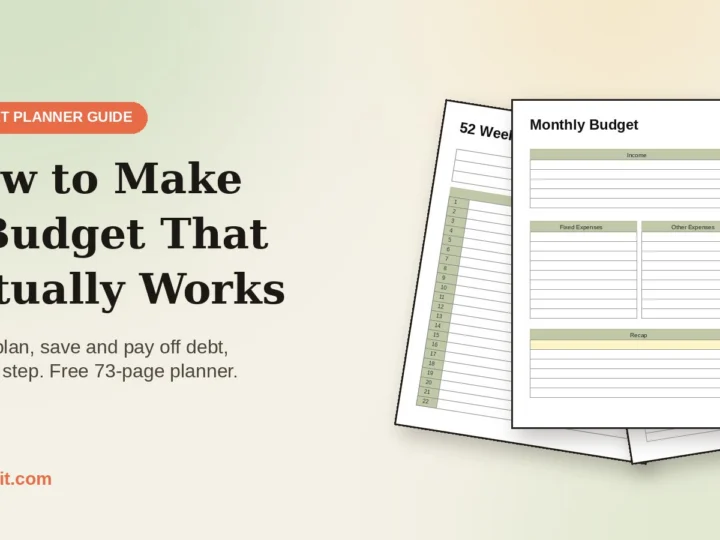
Do not include anything monthly. Netflix, rent, the phone plan and the gym belong in your ordinary budget. If you have not built that side yet, our guide on how to make a budget that actually works covers the monthly half — this article is only about what sits outside it.
Quick win. Scroll back through twelve months of bank statements and highlight every transaction over $150 that was not a monthly bill. That is your list, written by your own past. It is far more accurate than anything you will remember unaided.
Step 2: Price each one honestly, not optimistically
This is the step that decides whether the whole plan survives, and it is the one people rush.
The honest price of something is not the sticker price. It is the sticker price plus everything that arrives with it. A trip is not the flight; it is the flight, the bags, the transfers, the insurance, the food, the tickets, and the two days you take unpaid. A wedding is not the venue; it is the venue plus nine other categories and a tip line nobody mentions.
Use three sources, in this order:
- Real quotes. Two or three, for the same thing, written down. Always beats an average.
- What it cost other people. The reference-class approach: look up what this actually costs, at your size, in your area, this year.
- Your own last time. The most underrated source. What did last Christmas really cost, all in?
Two examples of how far the honest price sits from the imagined one.
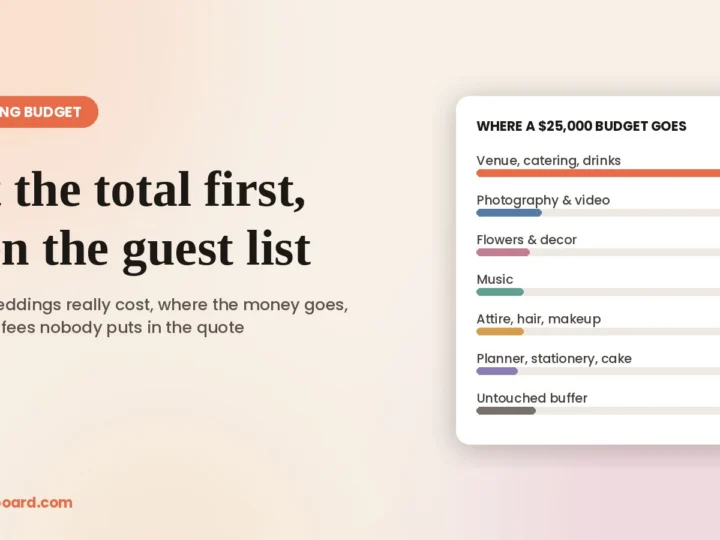
A wedding. The Knot Worldwide’s 2026 Real Weddings Study, based on more than 10,000 US couples married in 2025, puts the average wedding at $34,000 with 117 guests — roughly $290 a head before anyone has bought a ring or booked a honeymoon. The useful part of that figure is not the total, it is the per-guest number, because the guest list is the single lever that moves every other line: catering, seating, favours, the size of the venue you need. Cut twenty guests and you have cut roughly six thousand dollars without touching the quality of anything.
If you are pricing one, our wedding budget calculator splits a total across the ten usual categories, shows the cost per guest, and tells you what you would need to put aside each month to reach your date. Do it twice — once with the guest list you want, once with twenty fewer — and the trade-off becomes a number instead of an argument.
A trip. The number that matters is not the total, it is the cost per day, because that is the figure that tells you whether ten nights is a stretch or seven nights is comfortable. Work out flights per traveller, accommodation per night, then food, activities and local transport per person per day, and the total assembles itself. Our travel budget calculator does exactly that split and adds the two things people forget: that seven nights is eight days of eating, and that insurance, visas and airport transfers are a line of their own.
Then add a buffer. Ten percent on things you have done before, twenty on things you have not. This is not pessimism, it is the correction for the bias described above. A buffer you do not use becomes next year’s fund; a buffer you did not set becomes a card balance.
Step 3: Turn every total into one monthly number
Now the arithmetic, which is the easy part:
(total − what you have already saved) ÷ months until you need it = your monthly amount
Do it for every line, then add the monthly amounts together. That sum is the single most useful number in your whole financial life, because it is what your known future actually costs per month. Most people have never calculated it, and most people are surprised — usually unpleasantly the first time, which is exactly why it is worth knowing.
| Fund | Total | Saved | Months left | Per month |
|---|---|---|---|---|
| Car insurance | $1,200 | $300 | 9 | $100 |
| Christmas | $900 | $0 | 12 | $75 |
| Car repairs fund | $1,500 | $400 | 12 | $92 |
| Summer trip | $3,600 | $600 | 10 | $300 |
| New laptop | $1,400 | $0 | 18 | $78 |
| Dentist and glasses | $700 | $0 | 12 | $58 |
| Total | $703 |
If that total is comfortably affordable, you are done thinking and you can start transferring. If it is not — and for most people it is not, at least at first — you have three levers, and only three: lower the totals (fewer guests, fewer nights, a refurbished laptop), push the dates (the trip moves to next summer, which buys you twelve months instead of ten), or drop a fund entirely and say so out loud. What you must not do is leave the number unfunded and hope. That is not a plan, it is a card balance with a delay on it.
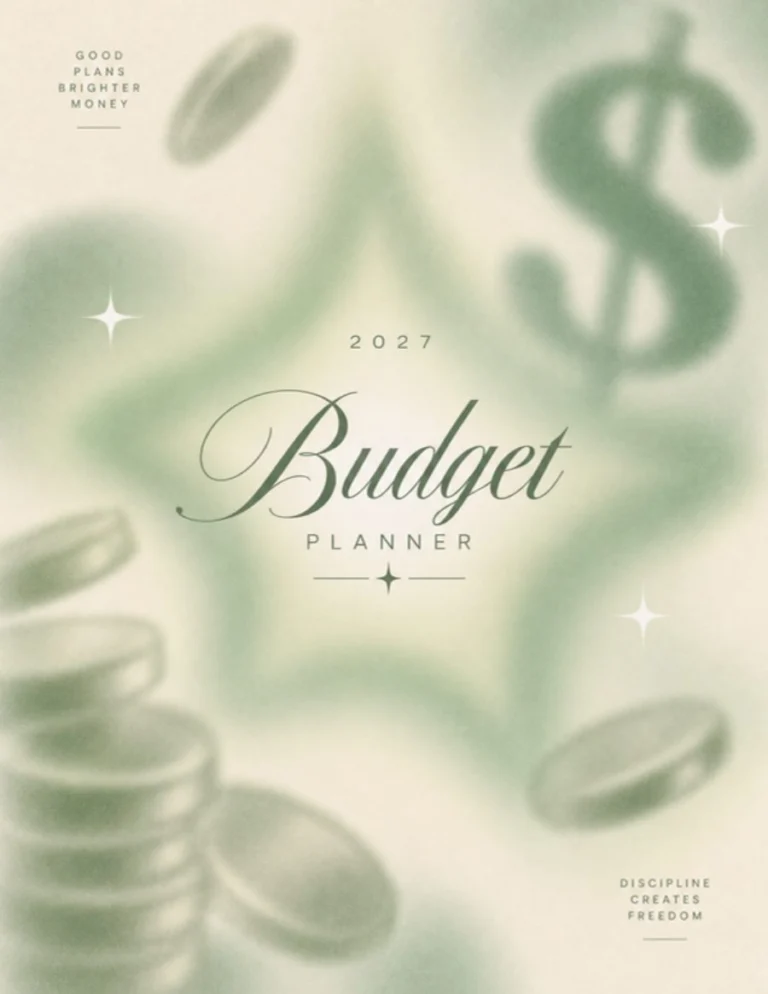
- 73 printable pages, US Letter PDF
- Budget, bills, savings, debt & goals
- Instant download, no spam
Get the free 73-page budget planner
Every page from this guide in one printable file: monthly budget, spending and bill trackers, sinking funds, savings challenges, debt payoff, net worth and a full 2027 calendar.
Step 4: Know what that monthly number costs you in hours
Here is the step almost nobody takes, and the one that changes behaviour more than any spreadsheet.
In Your Money or Your Life, Vicki Robin and Joe Dominguez argue that money is life energy: you did not pay $300 for the trip fund, you paid some number of hours of your life for it. Their point is not that spending is bad. It is that a price expressed in dollars is abstract and a price expressed in hours is not, and that people make visibly better decisions with the second one.
To do it, you need your real hourly figure, which is rarely the one on your contract. Work it out like this:
- start from what actually lands in your account, not the gross;
- divide by the hours you actually give the job — including unpaid breaks, the commute, and the evenings you answer messages;
- subtract the costs the job creates: transport, lunches out, the clothes, the childcare that only exists because you work.
For scale: the US Bureau of Labor Statistics reported median usual weekly earnings of $1,251 for full-time workers in the second quarter of 2026 — about $31 an hour before tax over a forty-hour week, and meaningfully less than that once tax and the costs above come out. Against that, a $703 monthly sinking-fund total is roughly a full working week, every month, spoken for before you decide anything. That is not a reason to feel bad. It is the number that lets you decide which of those funds you actually want.
If your hours vary — shifts, overtime, freelance work — our weekly hours calculator adds up a week with breaks, night shifts and overtime, and converts it to decimal hours and gross pay, which is the figure you need before you can divide anything by it.
Try this once. Take the three largest lines on your sinking-fund list and write the hours next to the dollars. “$3,600 trip” becomes “about 130 hours”. Some of those lines will suddenly feel cheap and some will not, and the ones that do not are the ones to cut. Do it once a year, not every week — the point is a decision, not a guilt loop.
Step 5: Give every fund its own pot
A sinking fund only works if the money is somewhere it cannot quietly become groceries. You have three workable options, and the best one is whichever you will actually maintain.
- Separate accounts or “pots”. Many banks now let you open named sub-accounts inside one account — Christmas, Car, Trip. The cleanest option by far: the balance itself tells you what is promised.
- One savings account plus a ledger. All the money in one place, and a page that says which slice belongs to which fund. Works perfectly, costs nothing, requires that you keep the page honest.
- Cash envelopes. Still the most tangible method for small, frequent funds, and still the reason the word “envelope” survives in budgeting. Not appropriate for large balances.
Then automate the transfer. Ramit Sethi’s core argument in I Will Teach You to Be Rich is that willpower is the worst possible savings mechanism, and that a standing transfer on payday beats any amount of discipline on the 28th. Set the transfer for the day after you are paid, not the day before the next one.
One warning worth stating plainly: a sinking fund is not an emergency fund. Sinking funds are for costs you can see coming. An emergency fund is for the ones you cannot — a job loss, a boiler, an urgent flight. They must not be the same pot, because the day you need one is exactly the day you will be tempted to raid the other.
Step 6: Decide the order when you cannot fund everything
You will not be able to fund every line at once. That is normal, and the order matters more than the amounts.
- A small emergency buffer first. Even a few hundred. The Federal Reserve’s 2025 household survey found that 63 percent of adults could cover a hypothetical $400 emergency with cash or its equivalent — which means more than a third could not, and for them every unexpected cost becomes borrowing. This buffer is what stops your sinking funds being eaten by the first surprise.
- Anything with a deadline you cannot move. The tax bill, the insurance renewal, the wedding you already booked.
- Anything where not having the money costs money. A car you need for work. A boiler in October.
- Anything where not having the money costs a relationship. The family wedding abroad, the milestone birthday.
- Everything else, in the order you actually care about.
Write the order down. The value is not the list, it is that next month, when the numbers do not stretch, you will not have to re-decide from scratch at ten at night.
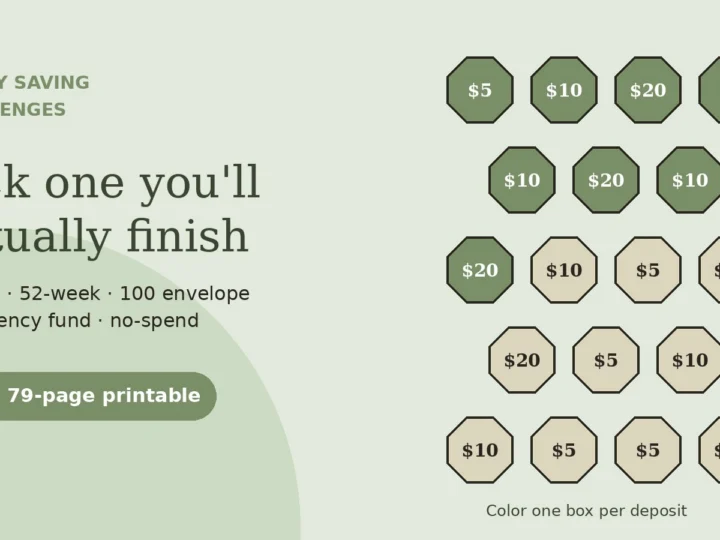
If the whole exercise shows you are short every month rather than occasionally, the problem is upstream of sinking funds, and it is worth attacking the base rate first — our guide to money saving challenges covers the structured ways to build the first thousand dollars when the monthly gap is the obstacle.
Step 7: What to do if you are already borrowing for these things
Most people arrive at sinking funds the hard way — after the trip is already on a card. That is worth addressing directly, because the interest on last year’s unplanned costs is often the exact reason there is no room to fund this year’s planned ones.
The scale of it is not marginal. Bankrate’s summer travel survey of 2,238 US adults found that 29 percent of prospective travellers planned to take on debt for their summer trip. And that debt is expensive: the Federal Reserve’s G.19 consumer credit release put the average rate on credit card accounts assessed interest at 22.15 percent in the second quarter of 2026. At that rate, a $3,000 trip paid off over three years costs well over a thousand dollars more than the trip.
If that is where you are, do two things in parallel rather than in sequence.
Fund the cheapest sinking funds now, even at tiny amounts. Not because the amounts matter, but because it stops the next Christmas going on the same card. Twenty dollars a month into a Christmas fund breaks the cycle more effectively than a hundred dollars of extra repayment does.
Then pick one payoff order and stop re-deciding it. There are exactly two defensible orders:
- Avalanche — highest interest rate first. Mathematically optimal: it always costs the least money and clears the debt soonest.
- Snowball — smallest balance first. Popularised by Dave Ramsey in The Total Money Makeover. It costs slightly more in interest but closes an account sooner, and for a lot of people that visible win is what keeps the plan alive long enough to work.
The honest answer is that the best method is the one you will still be doing in eight months, and the gap between them is usually smaller than people assume — often a few hundred dollars over the life of the debt. Our debt snowball vs avalanche calculator runs both on your actual balances and rates and shows the two debt-free dates and the two interest totals side by side, so you can see the real size of the trade-off for your numbers instead of arguing about it in the abstract.
One thing the calculator will show you that is worth knowing in advance: the extra payment matters far more than the method. Choosing the better method might save you a few hundred dollars. Finding an extra $150 a month usually saves thousands and years.
Step 8: Review it once a month, in ten minutes
A sinking-fund plan is not a one-evening project, it is a page you revisit. Once a month, on a fixed day:
- Move the money — or check the standing transfers went through.
- Update the totals where you now have a real quote instead of an estimate.
- Add anything new that appeared on the calendar this month.
- Close what is done. The car insurance is paid; the fund resets to zero and starts again for next year. This is the step that makes the system feel like it is working.
- Check the order still matches what you care about.
Ten minutes, twelve times a year. If you want this to sit alongside the rest of your planning rather than in a file of its own, the approach in our life planner guide puts the money pages next to the calendar and the goals — which matters here, because the reason a cost surprises you is almost always that it was written on a calendar you were not looking at.
The four calculators, and what each one is for
Everything above works on paper. These do the arithmetic, run in your browser, and ask for nothing — no account, no email, and nothing sent anywhere.
- Wedding budget calculator — splits a total across the ten usual categories, shows cost per guest, and converts the gap into a monthly savings amount. Use it at Step 2.
- Travel budget calculator — turns flights, nights, food and activities into a total, a cost per traveller and a cost per day, plus what to save each month. Use it at Step 2.
- Weekly hours calculator — a week of shifts with breaks, night hours and overtime, in hours and minutes, decimal hours and gross pay. Use it at Step 4, to find the hourly figure you divide by.
- Debt snowball vs avalanche calculator — both payoff orders on your real balances, with two debt-free dates and two interest totals. Use it at Step 7.
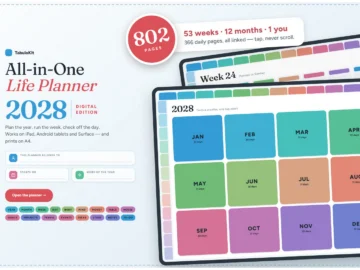
Want the funds to live next to the calendar?A hyperlinked planner with savings, budget and year pages in one file, so a cost you can see coming never arrives as a surprise.
Six books that change how you think about a big expense
How Big Things Get Done — Bent Flyvbjerg and Dan Gardner. Why almost every project costs more and takes longer than planned, and the one habit that fixes it: estimate from what similar things actually cost, not from your own best case. The single most useful book on this page.
Your Money or Your Life — Vicki Robin and Joe Dominguez. The hours-not-dollars idea in full. Changes what you are willing to buy more than any budgeting rule does.
The Psychology of Money — Morgan Housel. On why reasonable beats optimal: a plan you will stick to is worth more than a better plan you will abandon. The right frame for choosing snowball over avalanche, or the other way round.
I Will Teach You to Be Rich — Ramit Sethi. The practical mechanics: named sub-accounts, automatic transfers on payday, and deciding once instead of every month.
The Total Money Makeover — Dave Ramsey. The origin of the debt snowball, and a clear account of why the motivating order sometimes beats the mathematical one.
Thinking, Fast and Slow — Daniel Kahneman. The planning fallacy explained at the source — why the inside view of your own project is reliably wrong, and what the outside view looks like.
Frequently asked questions
What is a sinking fund, exactly?
A small amount set aside every month for one specific future cost, so that when the cost arrives the money is already there. The term is borrowed from company accounting, where a business sets money aside over years to repay a bond at maturity. At household scale it means the same thing: instead of meeting a $1,200 insurance bill once a year with whatever is in the account, you put $100 aside every month and meet it with money that was always meant for it.
How is a sinking fund different from an emergency fund?
A sinking fund is for costs you can see coming — insurance, Christmas, the trip, the dentist. An emergency fund is for the ones you cannot: a lost job, a boiler that dies, a flight you have to take tomorrow. Keep them separate. If they share a pot, the first genuine emergency will quietly spend the Christmas money, and you will end the year both short and surprised.
How many funds should I have?
Enough to cover the costs that would otherwise go on a card, and few enough that you will maintain them. Six to ten is the range most people settle at. If you find yourself with twenty, group them: “Car” is one fund covering insurance, servicing and tyres, not three. The point of the split is to stop money being spent twice, not to build a filing system.
Where should I keep the money?
Somewhere separate from your spending account, accessible within a few days, and not invested. These are short-horizon funds with fixed dates, so the priority is that the exact amount is there on the day — not that it grew. Named sub-accounts inside one savings account are the simplest setup that works.
What if I have to raid one fund for something else?
Then raid it, and write down what you did. A plan you break once and correct is still working; a plan you break silently stops being a plan. Reduce that fund’s target, push its date, or top it up over the next three months — but make the decision explicit rather than discovering the shortfall on the day.
Should I build sinking funds or pay off debt first?
Both, in a specific order: a small emergency buffer, then the sinking funds for costs arriving in the next few months, then everything spare at the debt. Funding nothing while you attack the debt feels disciplined but usually fails, because the next unplanned cost goes straight back on the card and you end the year where you started. The point of the small funds is not the saving, it is stopping the leak.
Where to start this week
You do not need the whole system to feel the difference. Open your statements, write down every irregular cost of the next twelve months, price the three biggest ones honestly, and divide each by the months you have left. That is an hour of work, and it will tell you something about your year that no monthly budget can. Then open one separate account, name it after the nearest deadline, and set a standing transfer for the day after payday.
Everything else — the other funds, the hours, the payoff order, the monthly review — can be added one line at a time. And if you want the paper version to work from, grab the free printable budget planner and start with its savings pages.
Read next
- Life planner: organize your year, your money and your habits in one place — one file for tasks, week, habits, goals, money and health.
- How to make a budget that actually works — the full method, from an honest snapshot to a monthly money date.
- Money saving challenges that you will actually finish — structured ways to build the first $1,000.

1 comment